
Fujifilm Instax mini 13
MSRP $93.95

“An affordable love letter to polaroids.”
Pros
- Pleasing instant prints
- Accurate viewfinder framing
- Simple one-button control
- Retro color profile
- Easy power swap with AA cells
Cons
- Not suited for landscape capture
- Can’t disable flash
- No tripod socket
- Blown out highlights
- Motion blur in handheld mode
Quick review
Months after switching to an iPhone 16 Pro, I pitted it against the “ancient” iPhone 6S. The comparison is almost laughable, but I wanted to see just how much algorithmic processing has changed the photos we click using modern-age phone cameras. The difference was stark, and in a lot of cases, I actually preferred the grainy but natural output from the aging iPhone’s single rear camera. I eventually shifted to apps such as the no-processing Halide’s Project Zero and Adobe Project Indigo. It subsequently landed me at the doorsteps of instant cameras that bring back the charm of polaroids. Fujifilm’s Instax label makes plenty of such cameras, and the Mini 13 happens to be its latest offering.
I’ve spent enough time with hyper-advanced smartphone cameras such as the Vivo X300 Ultra and Oppo Find X9 Ultra to know exactly what the Fujifilm Instax Mini 13 is not, and after a couple of weeks shooting with it, I’ve come to appreciate it precisely for that. In a world where my phone stacks a dozen exposures and runs them through a neural engine before I’ve even lowered it, this entry-level instant camera strips away all the technical frills and hands you raw, unedited, tangible fun. It’s had a visual glow-up too, leaning further into that “puffer jacket” silhouette that refines the pillowy look of its predecessors. This is pure point-and-shoot fun. No menus, no distracting screen, no janky exposure overrides, and nothing technical to fiddle with.
What stands out this time around is a built-in mechanical self-timer with two-second and ten-second delays. The big miss is a tripod thread, which severely hampers that new feature. In order to get the best out of it, you need to find a stable surface, balance the camera on uneven surfaces, or wedge it up with an included rubber strap charm. On the imaging front, the 60mm plastic lens paired with an unyielding automatic flash guarantees a retro, high-contrast charm that works wonderfully indoors but blows out bright outdoor highlights. But here’s the charming bottom line. The Instax Mini 13 succeeds entirely because of its limitations. It isn’t chasing digital perfection. On the contrary, it delivers immediate, wallet-sized prints that pin a fleeting moment into physical form, and that makes it a lovely carry for parties, casual outings, and family gatherings.
Fujifilm Instax mini 13 specs: What’s inside this charming camera?
| Film used | FUJIFILM instax mini Instant Film (sold separately) |
| Photo Picture Size | 62 mm × 46 mm |
| Lens | 2 components, 2 elements, f = 60 mm, 1:12.7 |
| Viewfinder | Real image finder, 0.37×, with target spot. Parallax correction for Close-Up Mode |
| Shooting Range | 0.3 m and beyond (use Close-Up Mode for 0.3 m to 0.5 m) |
| Shutter | Programmed electronic shutter 1/2 to 1/250 sec. Slow synchro for low light |
| Exposure Control | Automatic, Lv 5.0 to 14.5 (ISO 800) |
| Film Ejection | Automatic |
| Film Developing Time | Approx. 90 seconds (varies depending on the ambient temperature) |
| Flash | Constant firing flash (automatic light adjustment), recycle time: 7 seconds or less (when using new batteries), effective flash range: 0.3 m to 2.2 m |
| Power Supply | Two AA-size alkaline batteries (LR6), capacity: approx. 10 instax™ mini instant film packs of 10 exposures each per set of new batteries (depends on usage conditions). |
| Auto Power Off Time | After 5 minutes |
| Self-timer | Electronic operating time: approximately 2 seconds / 10 seconds |
| Other | Includes film counter and film pack confirmation window |
| Dimensions (W × H × D) | 105.5 mm × 124.7 mm × 67.6 mm |
| Weight | 327 g (without batteries, instax™ mini film loaded and strap attached) |
Fujifilm Instax mini 13 design and build
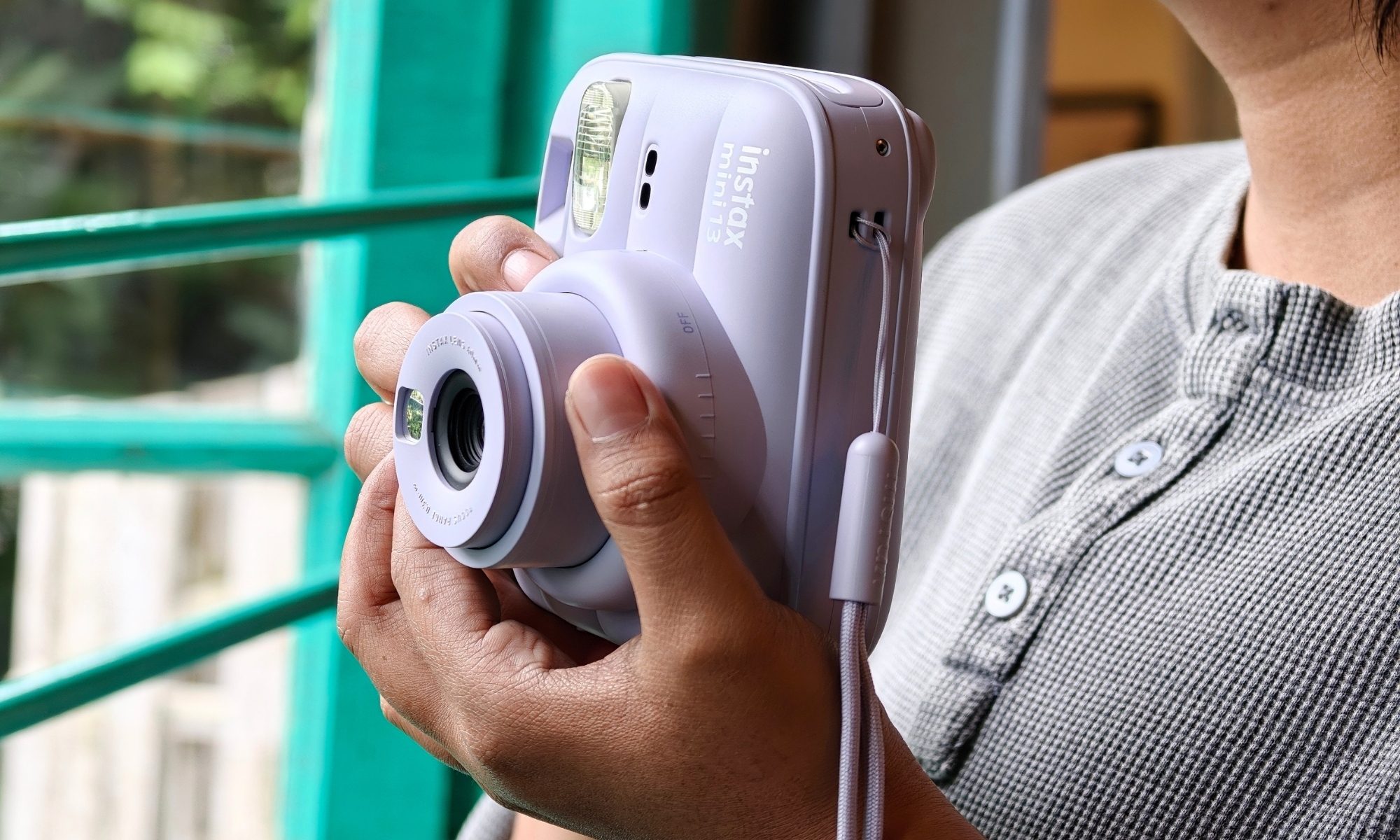
The Instax mini 13’s design screams approachability and playful charm, and that’s a deliberate choice. You will truly appreciate its charm once you put it next to the sharp edges and utilitarian metal plates of a high-end mirrorless system. The chassis is molded entirely from smooth, hard plastic, with rounded contours and stylized grooves running along the faceplate. There is no denying that it looks like a miniature puffer jacket or a plastic cloud. What I want to stress, having handled plenty of cheap plastic gadgets, is that it doesn’t feel cheap. The components fit together tightly with minimal seam flex, and it carries the brand’s long-standing reputation for robust build quality.
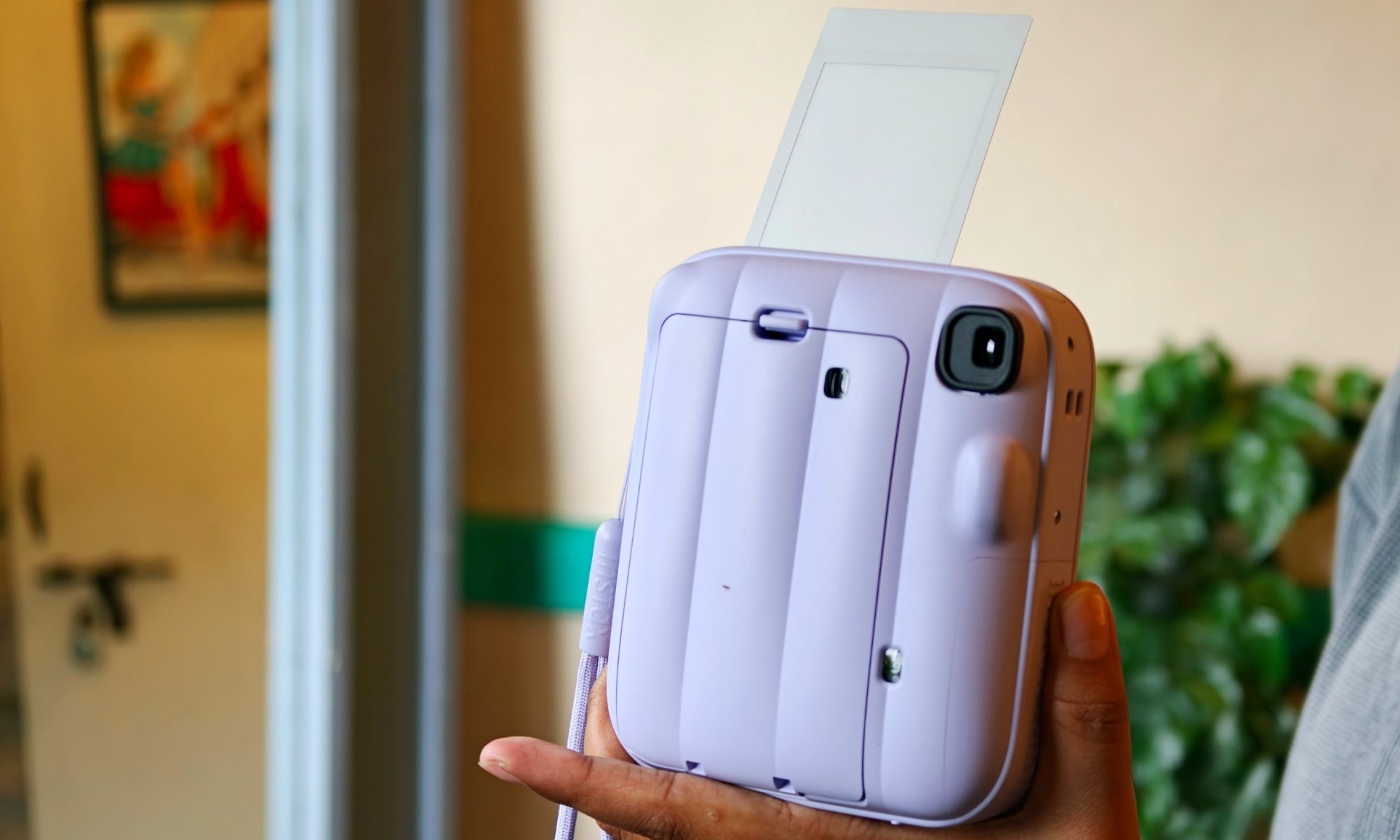
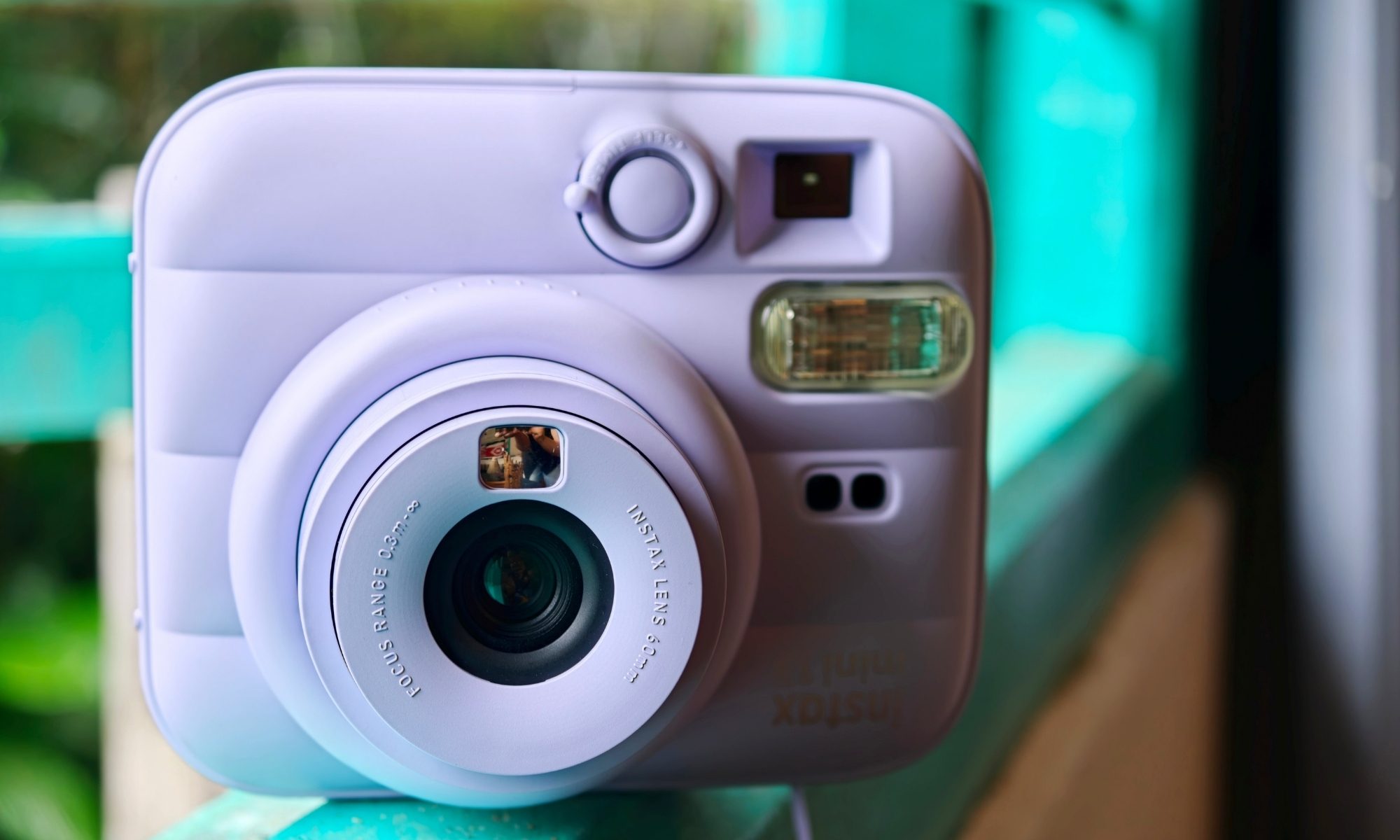
Aesthetically, Fujifilm knows its audience. There are five pastel color options up for grabs. You can pick between Candy Pink, Clay White, Dreamy Purple, Frost Blue, and Lagoon Green shades. The color is applied uniformly and softly, favoring muted matte finishes over aggressive neon. The front puts the retractable lens barrel in a slightly off-center position, flanked by a vertical xenon flash bulb, the light-metering windows, a mechanical shutter button, and a new gleaming silver branding plate that serves as the only dash of flashy design element.
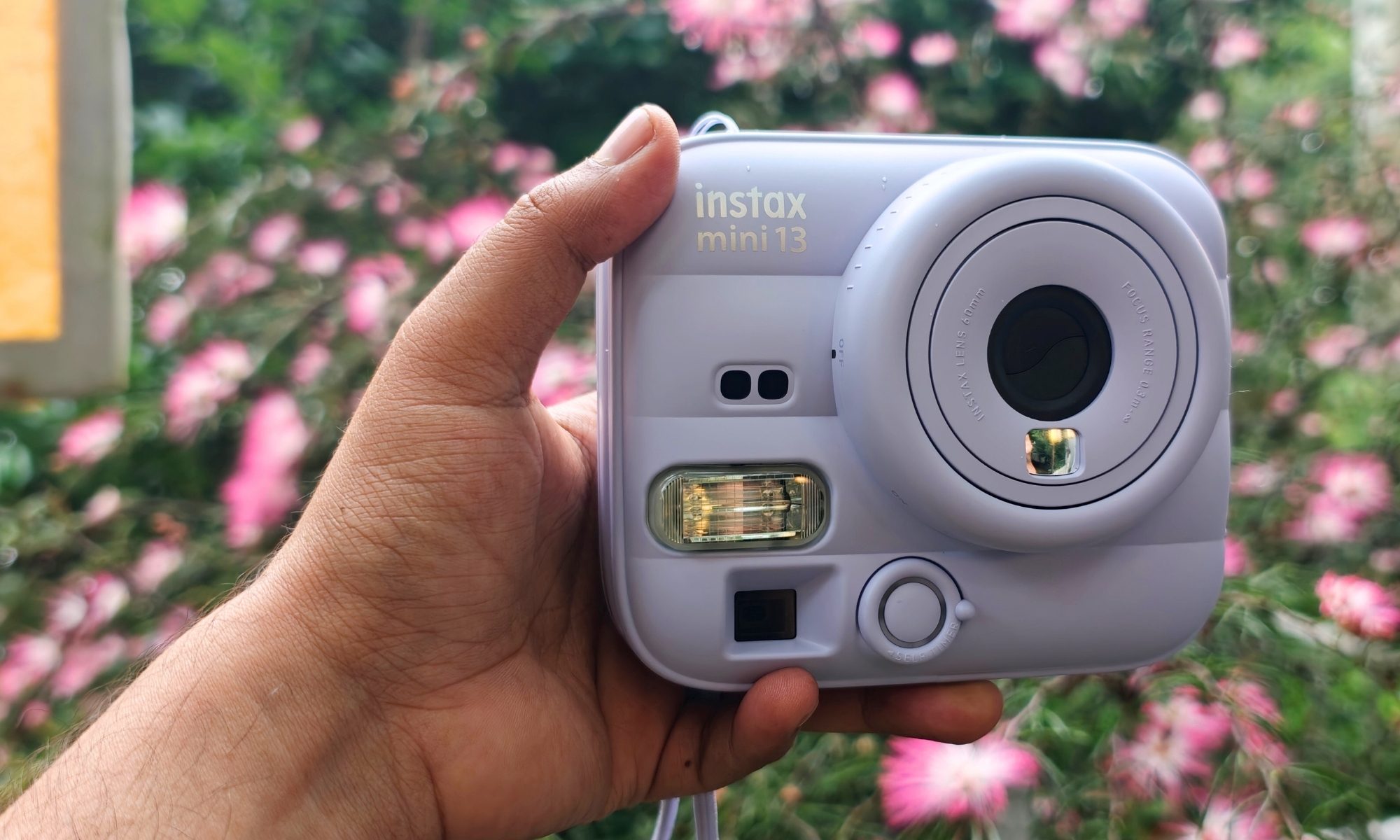
Despite its cloudy looks, this camera is surprisingly chunky. It measures roughly 4.9×4.1×2.6 inches and weighs about 306 grams (10.8 ounces) when empty. Once you load it with two AA cells and a full ten-shot film cartridge, it steps up closer to 14.5 ounces. I don’t hold that thickness against it, because it’s an unapologetic byproduct of analog physics rather than lazy design. The credit-card-sized instant sheets fit in a broad internal chamber, and the 60mm lens has to extend far enough from the body to throw an acceptable light cone across the physical film plane.
Broadly, you’re carrying a tiny darkroom, instead of a phone.
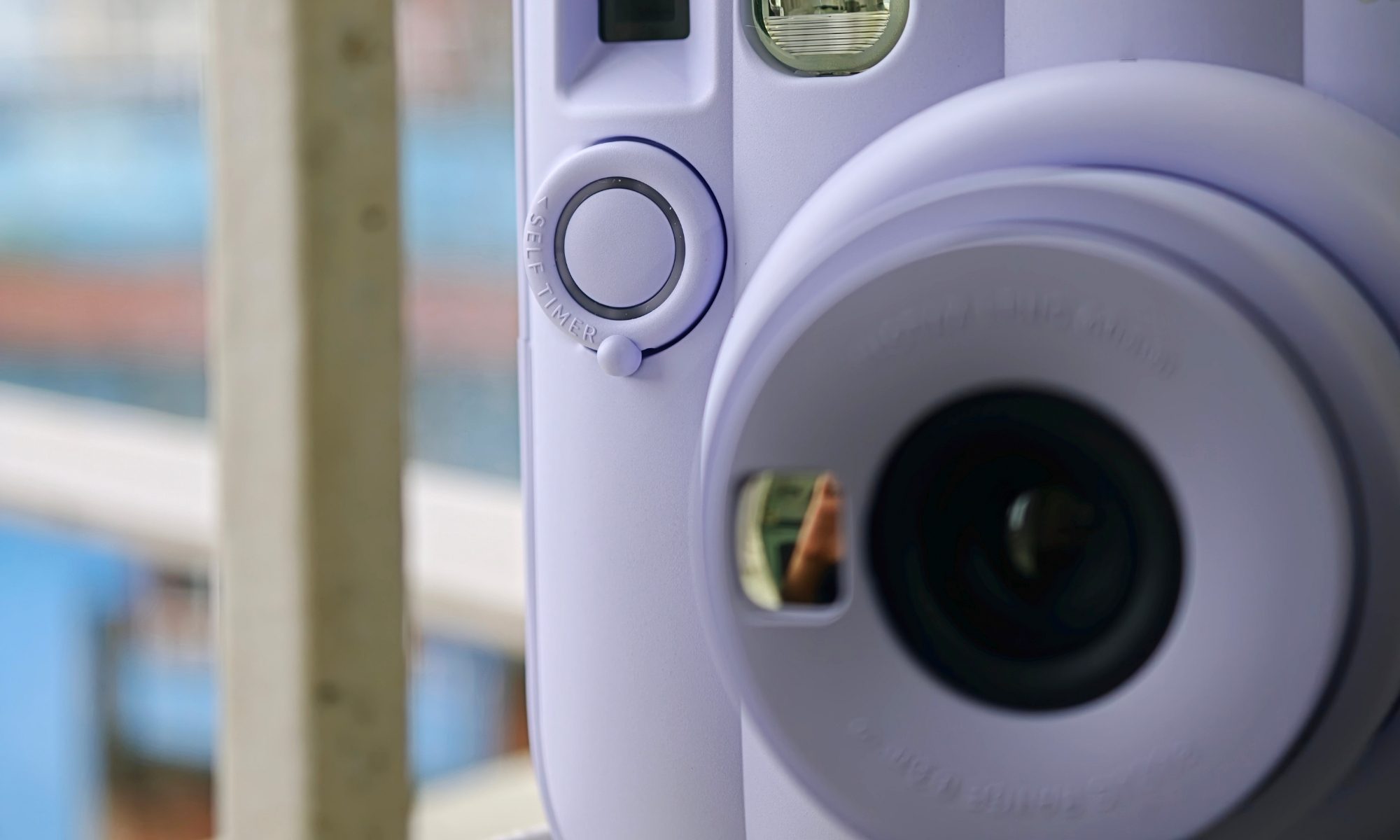
Talking about the ergonomics, the body is optimized hard for vertical, portrait-oriented shooting, and once I stopped fighting that, things went smoothly. The right side has a natural rounded bulge that falls into your palm as a grip, backed up by a plastic thumb rest on the rear cover. Held vertically, my right index finger dropped straight onto the shutter while my left hand steadied it from below. It’s practical and intuitive.
But as you rotate it by 90 degrees for a wide horizontal landscape, the handling falls apart. In this orientation, your hands are shoved into clumsy positions, and it’s alarmingly easy for a trailing finger to drape over the vertical flash array or, worse, cover the automatic exposure sensors. If you block those sensors, you fool the camera into thinking it’s in total darkness, so it drags the shutter to its slowest limit and completely blows out the frame. I ruined a couple of shots before I trained myself to keep my fingers clear.
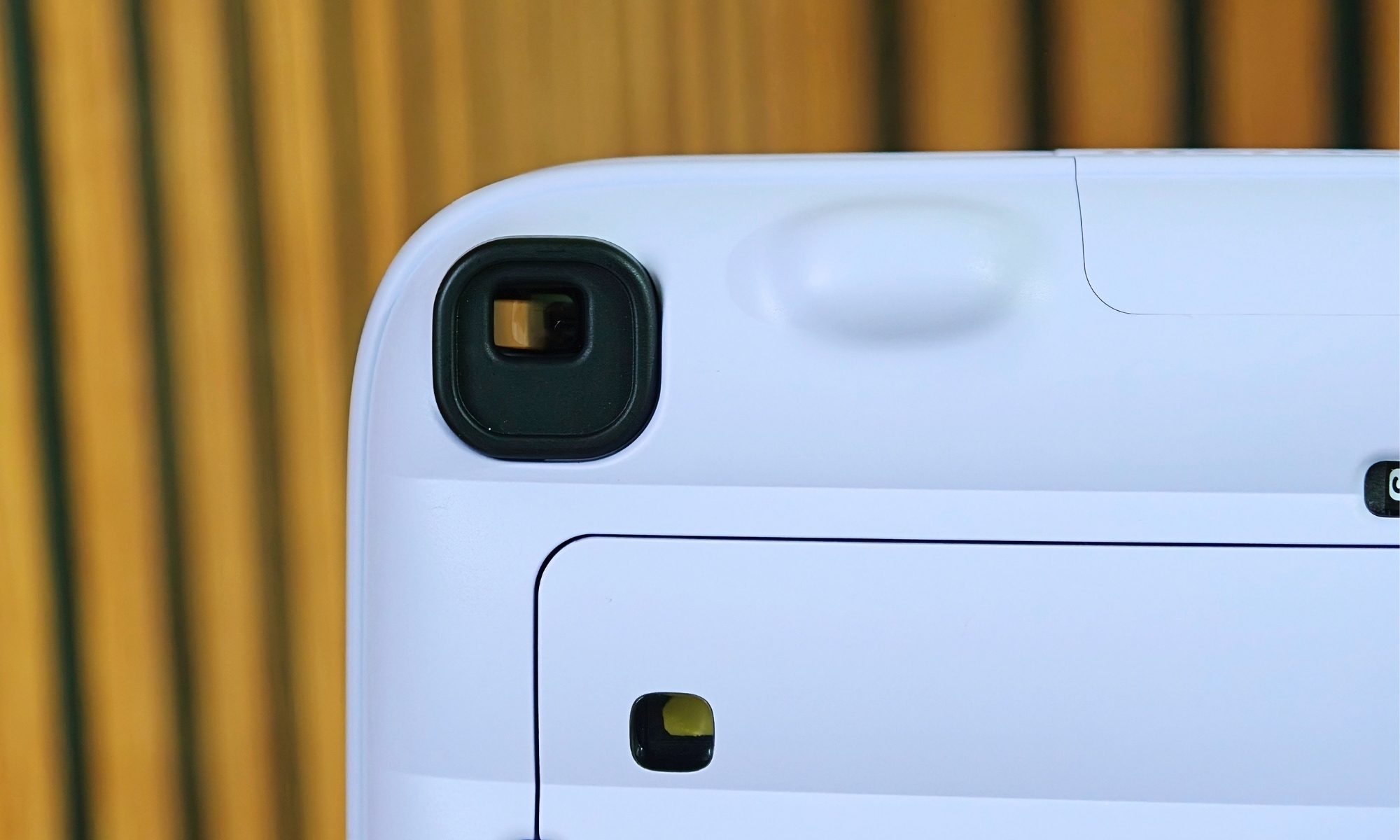
The rear panel is dominated by the film door, held in place by a mechanical sliding latch. When opened, you get a clean interior cavity where you line up a yellow registration mark on the film pack with a matching dot inside the body. As you snap it shut, the counter window in the lower right corner shows an “S.” When you press the shutter after loading the pack, the internal motor spits out the black protective slide sheet, resetting the mechanical counter to “10,” which then ticks down to zero frame by frame as you shoot.
Score: 9/10
Fujifilm Instax mini 13 controls and viewfinder
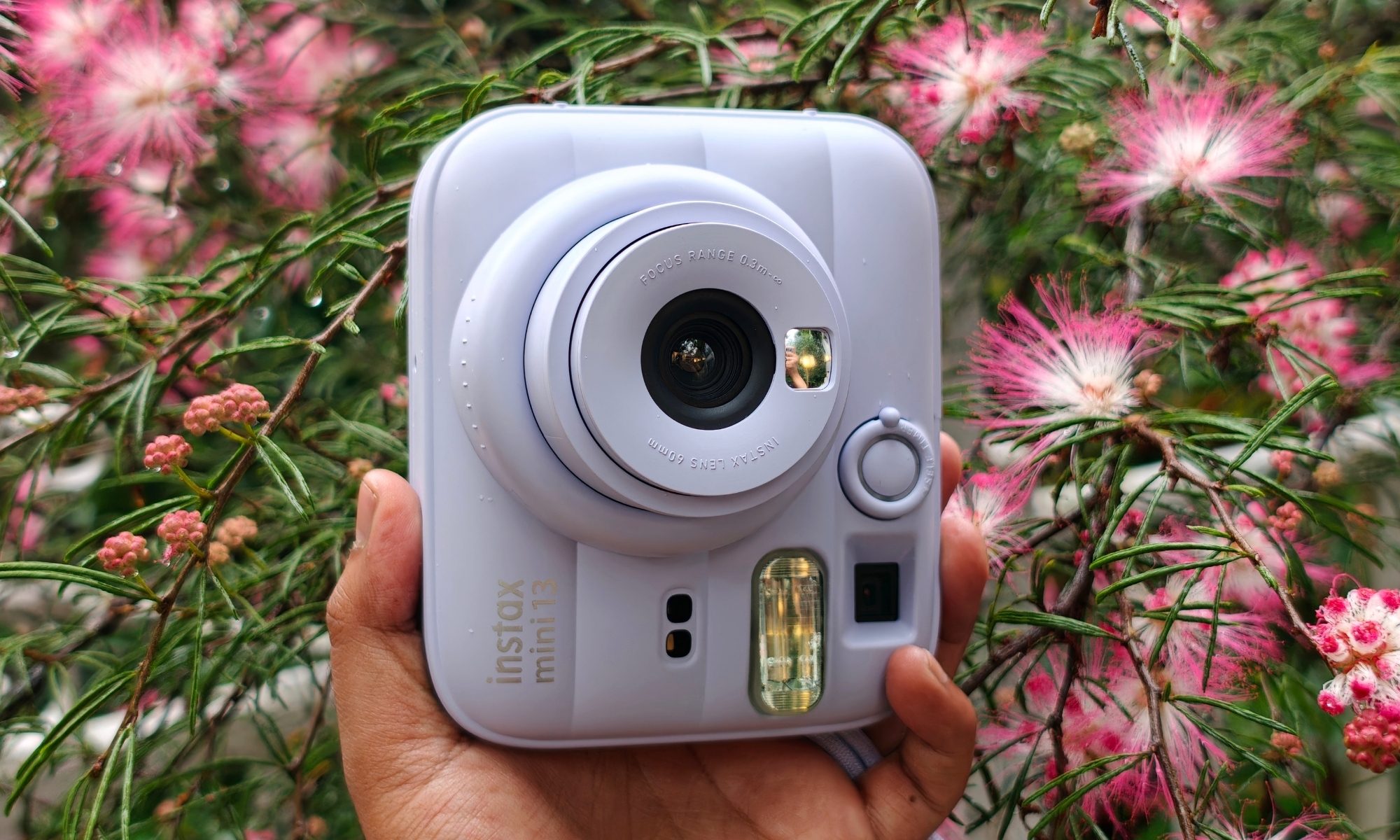
The best part about the Instax Mini 13 is just how utterly simple it is to operate. There is virtually zero technical baseline, and that’s the whole point. I handed it to people who’d never touched an instant camera, and they were shooting within seconds. There are no power switches and no electronic menus. Turning it on is baked into the lens barrel itself. You grab the thick plastic ring around the outer lens element and twist it clockwise until it locks with an audible click, and an orange LED lights up. The twisting motion also projects the lens barrel out from the body and preps the high-voltage flash capacitor.
The lens ring has three key positions. The OFF position retracts the lens, shuts the light barrier, and cuts power entirely. As you twist and reach the ON spot, the lens is prepped for regular capture spanning distances from 20 inches (0.5 meters) out to infinity, which covers environmental portraits, landscapes, and group shots. The Close Focus ring preset takes one more twist past that first stop, physically shifting the internal plastic elements closer together to optimize for macro subjects strictly between 12 and 20 inches (0.3 to 0.5 meters) from the lens tip.
I, however, learned it the hard way that getting this manual toggle right is vital. The camera gives you no warning in the viewfinder if you’re in the wrong mode. If you forget to click into Close Focus mode before you stretch your arm out for a selfie, the print comes back with permanent, unrecoverable blur. On the flip side, if you keep the lens locked in Close Focus mode while shooting a distant street scene, the whole background smears into softness.
There’s no undo for film capture, so learning the two basic modes is non-negotiable.
As far as framing goes, it runs through a tiny inverted Galilean optical viewfinder in the upper-right corner, with a magnification of roughly 0.37x compared to the sensor image. The window is pretty small. As a person who occasionally shoots in glasses, I found it pretty cramped. Thankfully, the view it offers is crisp, bright, and unmagnified. I was genuinely impressed by the alignment accuracy, which is a massive upgrade over larger formats like the Instax Wide 400. Older entry-level bodies suffered badly from parallax error up close, where the offset between the viewfinder and the actual lens axis shoved subjects sideways in the final print.
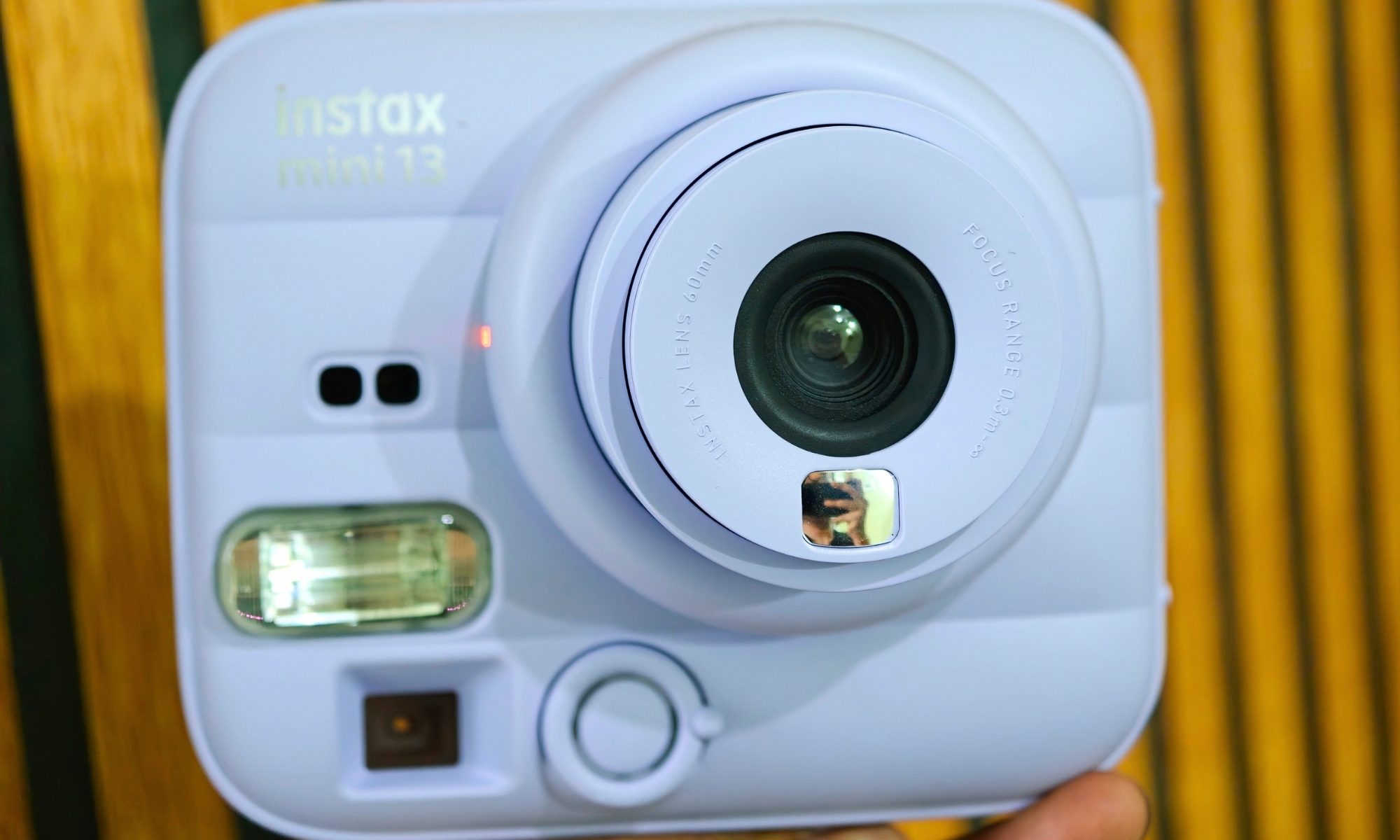
Thankfully, that’s not the case here. Every subject that I put in the center of the optical viewfinder landed accurately on the physical film sheet, drastically cutting down on wasted frames from clipped heads or off-center compositions. For selfies, there’s a small polished convex mirror set into the front lens housing, and as long as your face sits inside that reflective square, your framing stays well-centered.
The marquee new feature is the mechanical self-timer collar, a ring wrapped around the base of the shutter button on the front plate. A short flick sets a 2-second delay and makes the orange LED inside the shutter button blink rapidly. If you twist and hold it firmly for a full two seconds, it locks into a 10-second countdown, signaled by a solid, continuous orange glow. If you need to bail before exposure, another turn of the collar resets it instantly. It’s a clever mechanical design and feels great in practise.
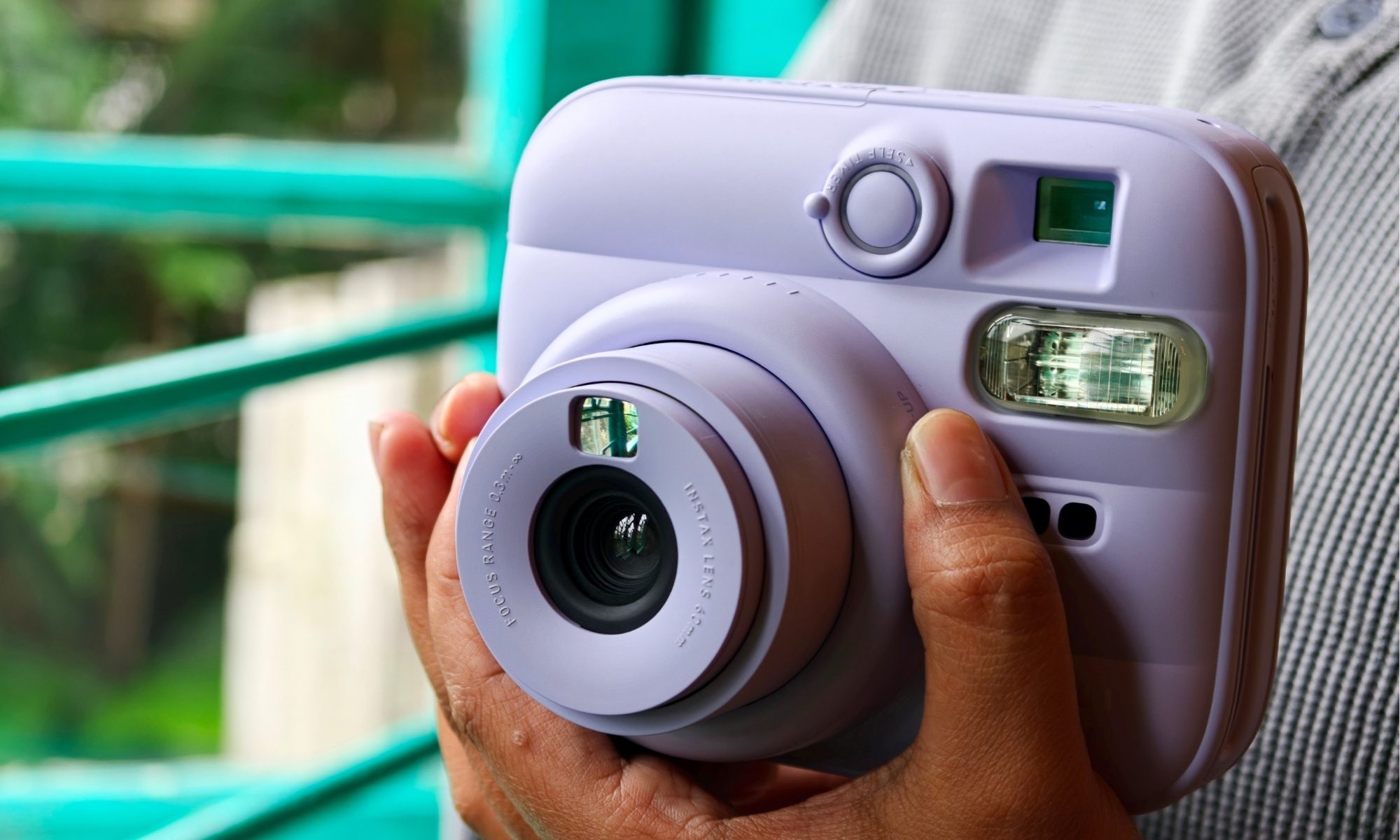
Unfortunately, it also exposes the most infuriating aspect of the Instax Mini 13 camera. The bottom is entirely flat and smooth, with no universal tripod socket anywhere. You cannot screw it onto a tripod or selfie stick, which guts the usefulness of a ten-second group timer. Fujifilm’s solution is a thick rubber charm hanging off the woven wrist strap, cut with a sloped, wedge-like cross-section. You’re meant to unhook it and jam it under the camera base on a tabletop to shim the lens upward. It does stop the camera tipping over, but it locks your remote group photos into awkward, low-angle perspectives that force everyone to crouch toward the table to fit in frame. It’s a clever workaround, but far from a solution. And yes, I scoffed every time I had to use it.
Score: 8/10
Fujifilm Instax mini 13 image quality
Let’s get to the meat of this review, and that’s the quality of the prints you get from the Instax 13 mini. Everything hangs off a fixed 60mm plastic lens with an unyielding fixed aperture of f/12.7. When pitted against modern digital optics, a slow, all-plastic lens with a tiny fixed aperture would be written off as unusable. But you have to reset your expectations for this medium. The goal is vintage, warm, punchy, tangible keepsakes, and inside that lane the camera is lovely.

The 60mm focal length behaves roughly like a 35mm wide-normal lens on full frame, giving you a versatile frame line that comfortably holds a couple of people or a modest slice of the street in front of you. Of course, an f/12.7 design is pretty stingy on light exposure, and as a result, the camera leans entirely on high-speed film and an over-eager flash. It shoots exclusively Instax Mini cartridges, rated at a very sensitive ISO 800, and the fully automatic exposure system picks shutter speeds between 1/2 and 1/250 of a second. You don’t get any adjustment scope here, and once again, that’s by design.
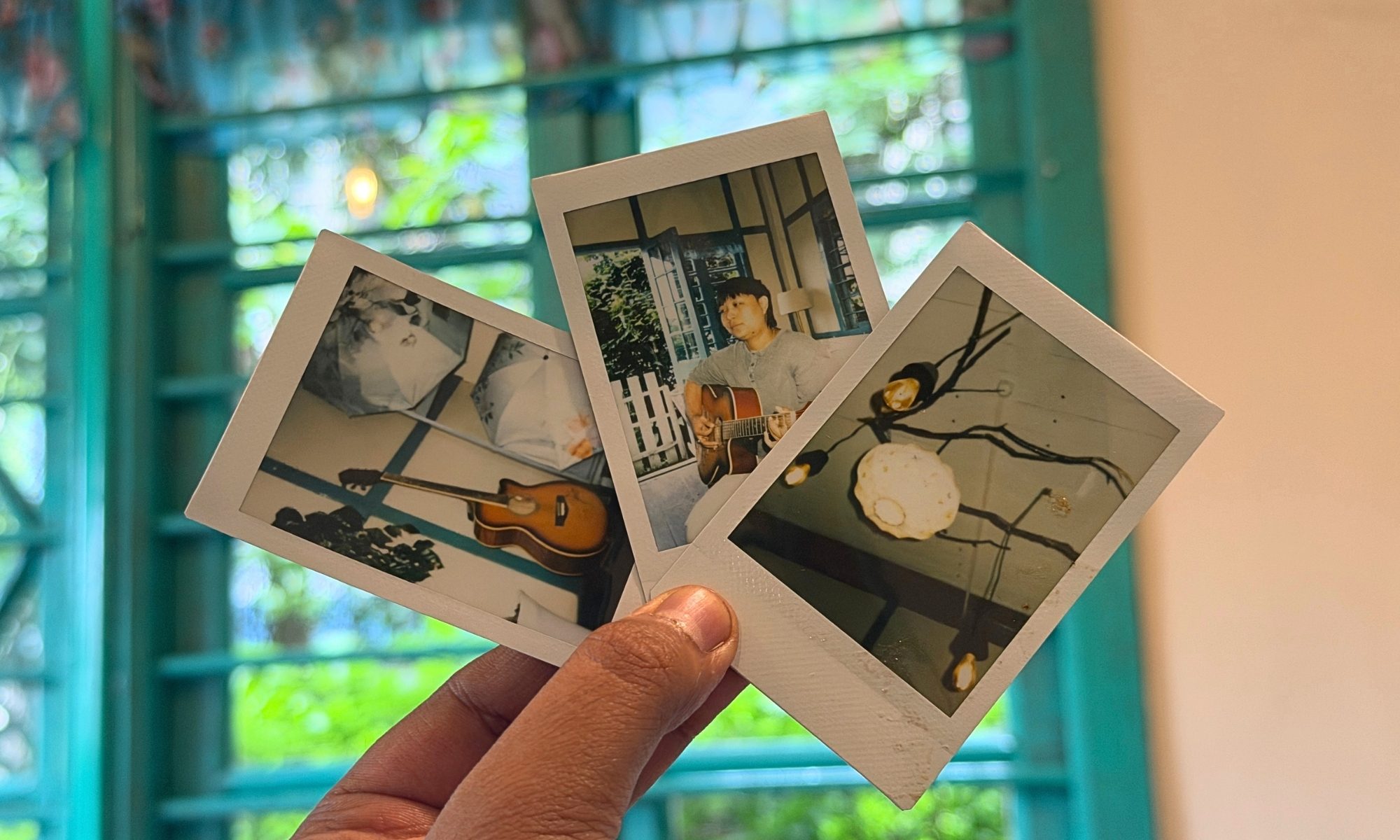
The most important rule that you must internalize is that the vertical flash cannot be turned off. There’s no toggle, menu wheel, or manual bypass of any kind. Whether you’re in a pitch-black lounge or standing under blazing midday sun, the flash fires at full energy every time the shutter drops. That absolute reliance on flash creates a specific, instantly recognizable look. Fortunately (and to its misfortune, as well), this is where the camera either sings or struggles depending entirely on the light situation around you.

If you’re carrying the Fujifilm camera Indoors, in dim bars, or at nighttime parties, the results are quite pleasing. The flash lights up subjects in an optimal three-to-six-foot zone, while painting the surfaces with a vibrant, high-contrast, and slightly punchy saturation. The flash impact falls off quickly as the subject distance increases, which directly means the backgrounds drop away into deep, inky shadows. That stark separation helps isolate your subjects into those iconic, classic instant snapshots. This is where the camera is at its best.
But as you walk into the outdoors and explore the world under a bright sun, the dynamic range struggles quickly become apparent. The supplied Instax film has an incredibly narrow exposure latitude, and the automatic shutter tops out at a relatively slow 1/250, which simply isn’t fast enough at f/12.7 to tame bright daylight on an ISO 800 base. As a result, bright blue skies, white clothing, and fair skin clip straight into a chaotic detail-free white canvas. Mid-tones lose their color grading and shadows crush into flat black. It’s the lone scenario where the camera’s rigidity actively works against you, and there’s nothing you can do about it.
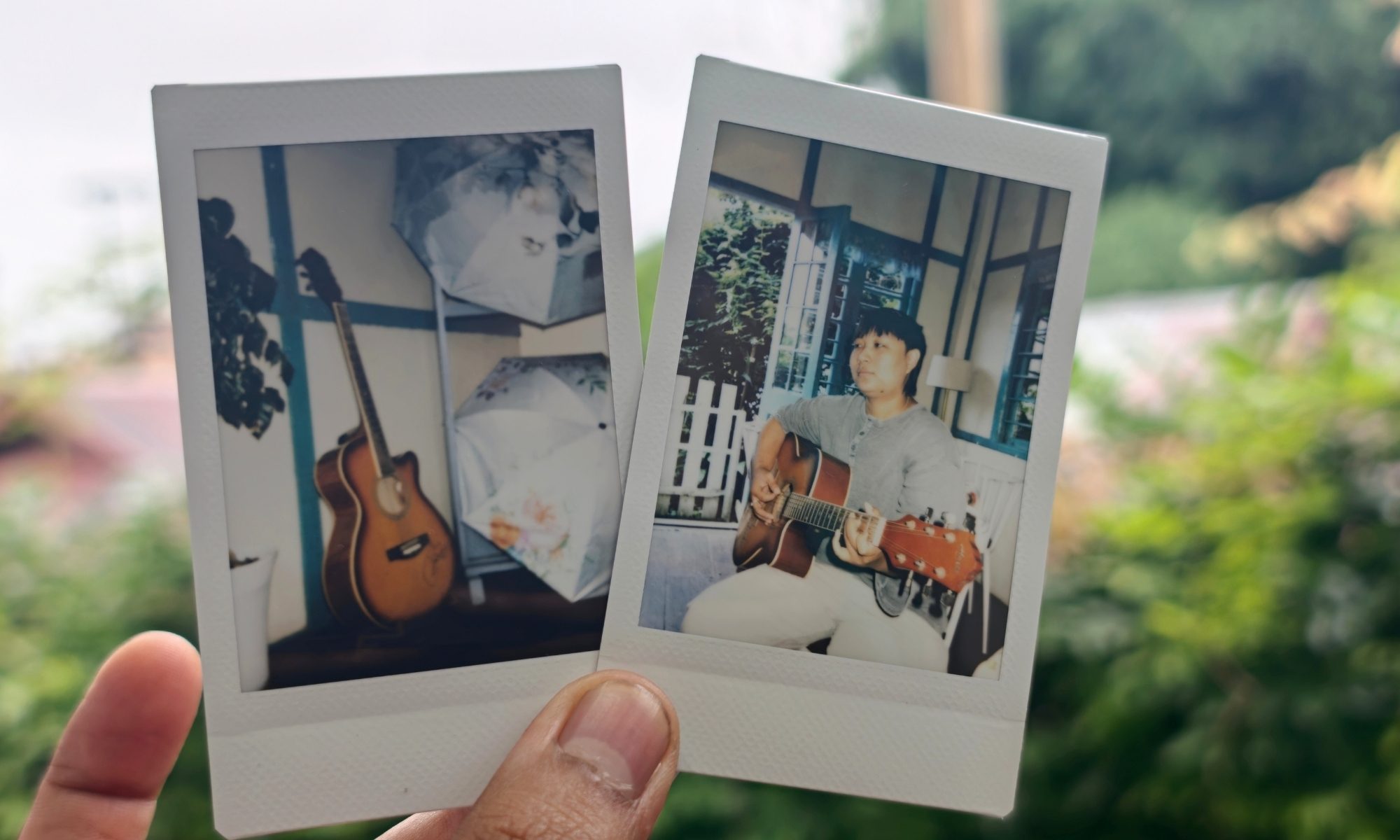
The images are inherently soft, without the clinical resolution or micro-contrast of modern glass. Most importantly, the color science skews toward warm and retro. Greens go deep and lush, while blues turn heavily saturated. The warm tones pick up an appealing vintage character, and it looks stunning despite the lack of sharpness. It’s a look, and it’s a good one. The only challenge is the focus blur and in-hand stability. Even with minor hand movement while pressing the shutter, the images lose out on sharpness. If you just place the camera on a still surface, the same frame turns out much sharper on the print.
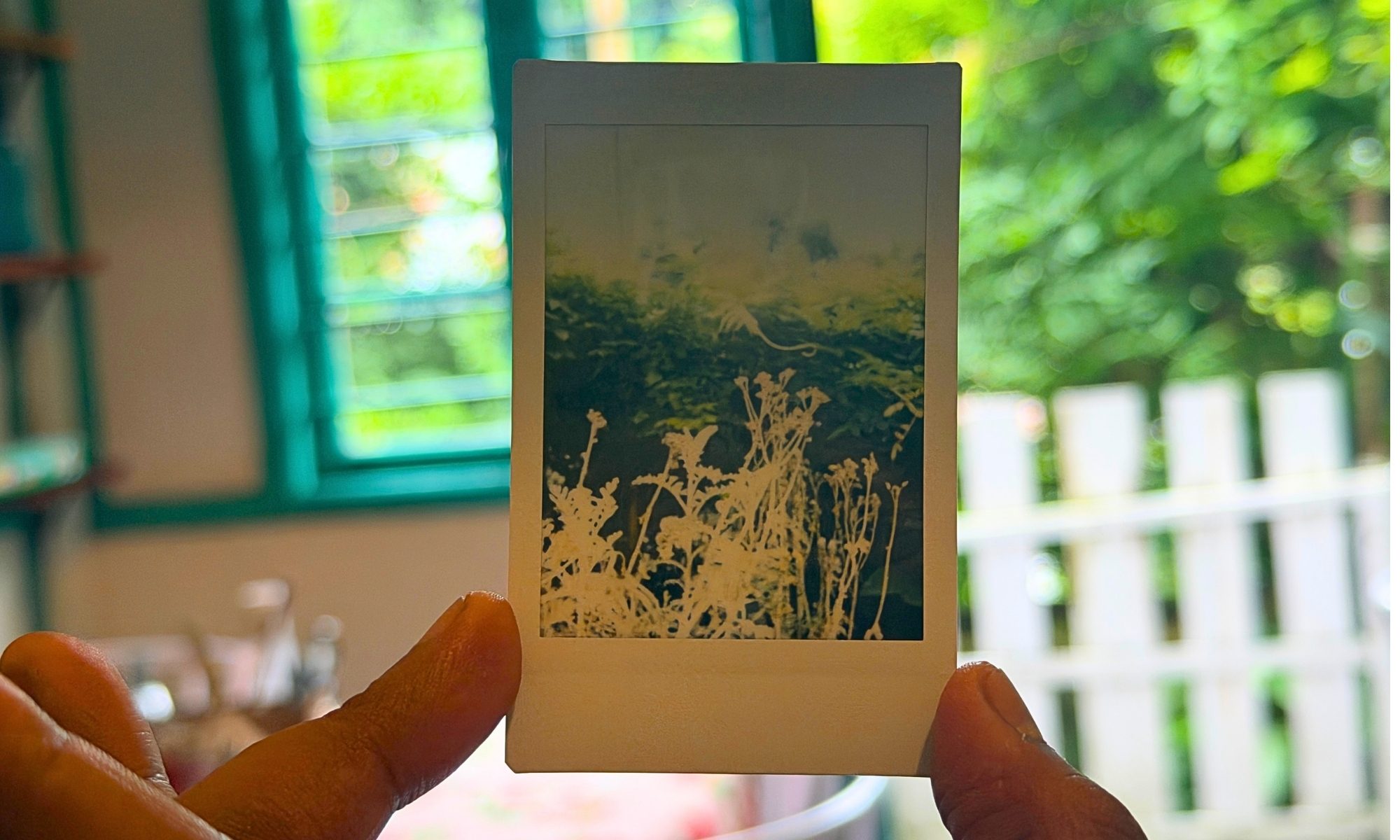
The real triumph of the image engine is the consistency. Competitor formats like modern Polaroid I-Type film are notoriously sensitive to ambient temperature, prone to chemical color shifts, and can take up to 15 minutes to stabilize. Fujifilm’s emulsion is nothing short of a quantum leap by comparison. Once the motorized rollers eject the print, the image starts to appear within 30 seconds and reaches full, archival stabilization in roughly 100-110 seconds. The prints come out punchy, stable, and immune to the structural development artifacts that plague the alternatives. You hand someone a photo, and it just works, every time.
Score: 7/10
Fujifilm Instax mini 13 battery life
The mechanical and electrical demands of a fully analog instant camera like the Fujifilm Instax Mini 13 are higher than you’d guess. Every shot has to cycle a motorized ejector gearbox, drive high-tension rollers that crush the chemical pods at the base of the sheet, run the automatic exposure calculation, and instantly recharge a high-voltage xenon flash capacitor. To meet those regular power spikes, the camera draws power from two standard AA alkaline batteries. The decision to stick with a regular AA battery is a huge win for practical reasons.
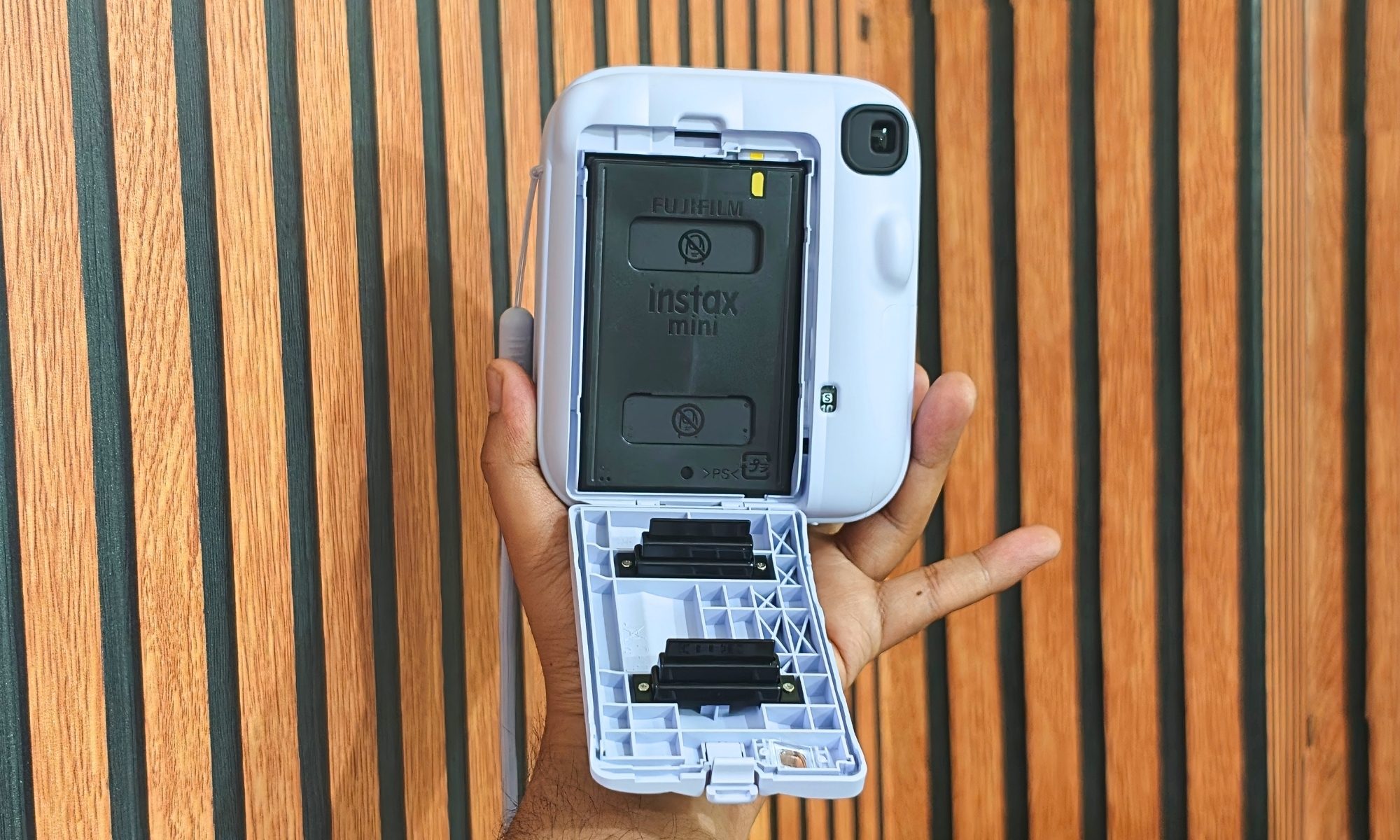
Plenty of digital and higher-tier instant cameras use proprietary lithium-ion packs that charge over USB. That’s always a limiting factor, irrespective of the gadget you are carrying. For a camera like the Instax Mini 13, which is built for festivals, remote travel, weddings, and late-night parties, it benefits enormously from universal battery access. If it dies mid-trip or halfway through a reception, replacement AAs are waiting at any convenience store, nearby supermarket checkout, or hotel gift shop. There’s no hunting for an oddball charging cable or a rare lithium cell.
It’s an operational peace of mind that matters more than spec sheets admit.
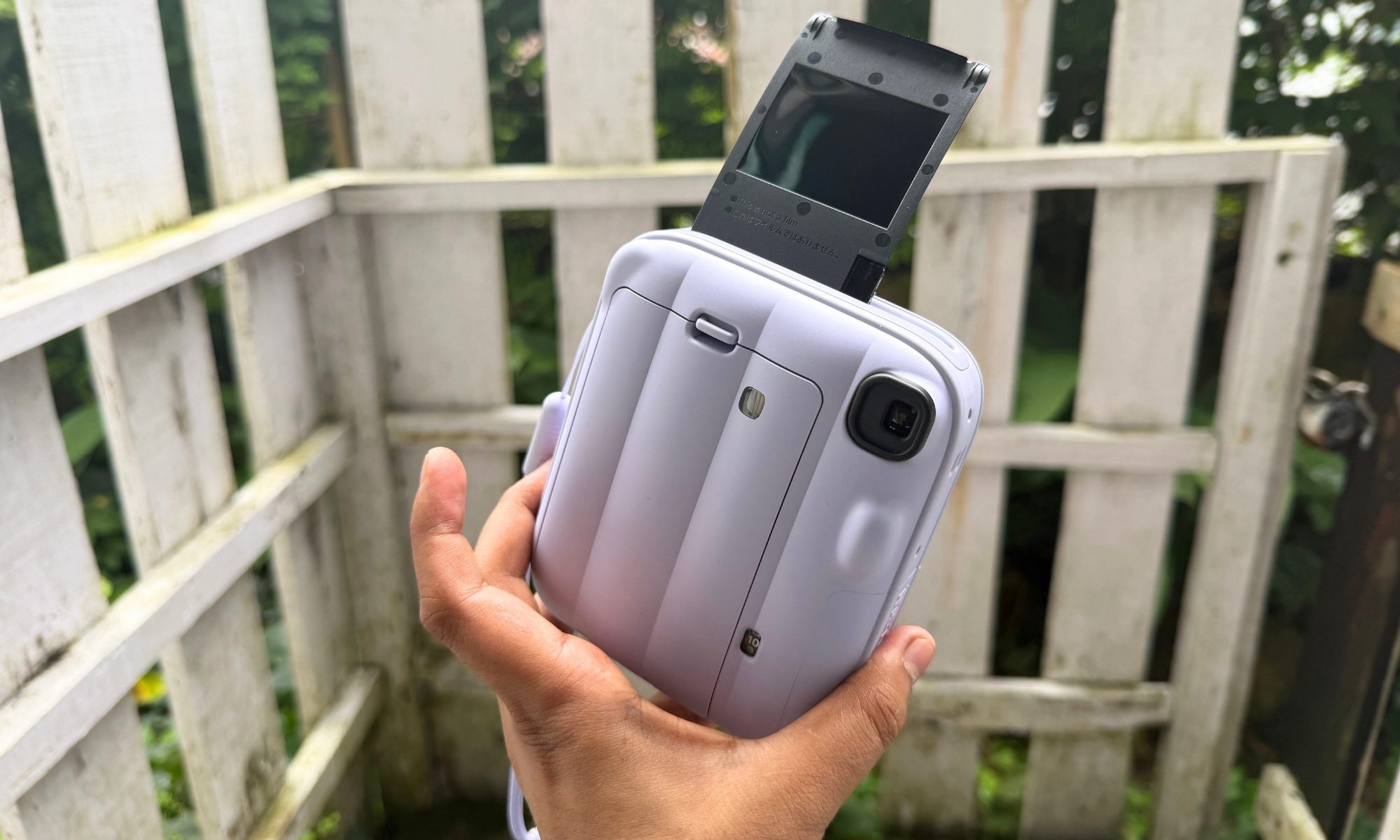
Talking about battery longevity, the kit is fairly efficient. A fresh pair of AA cells should reliably expose, flash, and produce about 100 frames. Since film ships strictly in packs of ten, that works out cleanly to ten complete cartridges per battery change. Moreover, instant photography is inherently slow and deliberate, which means the real cost (of the print pack) discourages you from spraying clicks. That means even with an enthusiastic usage spread across dozens of shots, a single set of AAs can easily stretch across several weeks, or even months.
Score: 9/10
Should you buy
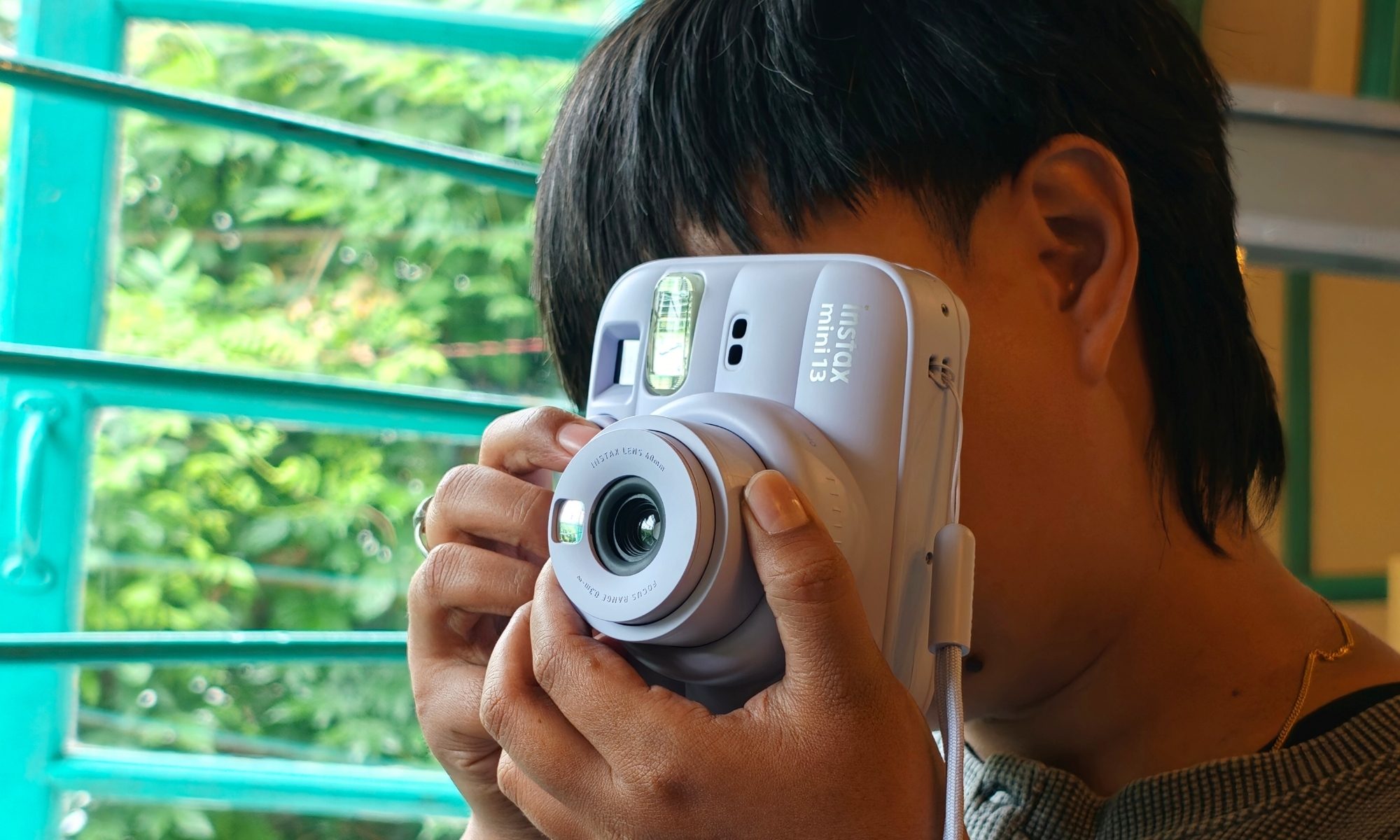
The Fujifilm Instax Mini 13 isn’t targeted at a specific corner of the market. Instead, it wants to win converts. Whether it deserves a place in your bag comes down to an honest look at what you want from photography. If your goal is pixel-peeping ultra-sharp textures, manually dialing shutter speeds, building complex double exposures, or rescuing detail from high-dynamic-range scenes, this one is an agent of pure frustration for you. It deliberately denies you control. You can’t disable the flash for subtle natural light. There is no exposure compensation facility. Moreover, the missing tripod socket turns self-timer setups into a balancing act.
On the other hand, if you see photography as a medium for spontaneous joy and physical sharing, the Instax Mini 13 is a triumph. It frees you from the exhausting cycle of digital perfectionism, where you shoot, filter, edit, and then bury everything in a cloud vault you’ll never open again. These physical prints carry real tactile and emotional weight. They’re immediate artifacts, meant to be handed straight to a friend, stuck to a fridge door, or slipped behind a clear phone case. I’ve made more of those little handoffs in two weeks with this camera than I have with years of phone photos.
Financially, the barrier to entry is refreshingly low, with a street price sitting comfortably around $94. That makes it a fantastic, low-stress gift for creative teenagers, college students, travelers, and basically anyone who likes keepsakes. The real cost, though, is the prints. A twin pack of 20 sheets runs about $24, which works out to roughly $1.2 for every press on the shutter button. That number changes how you shoot. You stop firing mindlessly, slow down, wait for the framing to line up, make sure everyone’s smiling, and consciously choose to document a specific slice of time. If you ask me, that friction is part of the appeal.
If you already own an Instax Mini 11 or Mini 12, there’s no logical reason to upgrade to the 13. The 60mm lens, the fixed aperture, the automatic exposure logic, and the final image output are all identical. The self-timer is a welcome luxury, but it isn’t impactful enough to justify an upgrade, especially given how frustrating that timer is without a tripod socket. If you’re stepping into instant analog film for the first time, though, or hunting for a charming snapshot tool that guarantees smiles, the Mini 13 is the undisputed value champion of the instant market.
Why not try
Fujifilm Instax Mini 99— For anyone who loves the credit-card Mini format, but wants more creative controls, this is the right pick. Priced at roughly $250, it drops the playful look for a sleek matte-black body and adds a proper manual exposure compensation dial. More importantly, it comes equipped with a physical button to disable the flash entirely, and also offers a dedicated macro mode, a self-timer, a proper 1/4-inch tripod thread, and a rechargeable lithium-ion battery. It even features color-changing LEDs that shine onto the film during exposure to create natural, physical light leaks and color effects with no digital trickery.
Fujifilm Instax Mini Evo — If the anxiety of wasting an 85-cent sheet on a blurry frame is what’s holding you back, this hybrid is an acceptable compromise. With a sticker price of $235, it’s a digital camera fused with an instant printer. You can frame, shoot, and review the frame on a color LCD screen, store shots on a microSD card, capture hundreds of images, keep only the best, apply lens effects, and color filters through retro dials. You can cherry-pick the shots you want to print, which is a relief. When you’re not snapping pictures directly, it also pairs with your phone over Bluetooth as a portable printer for your camera roll.
Fujifilm Instax Wide 400 — This one is for folks seeking a wider print format. Currently going for $175, it uses sheets that are nearly twice as wide as the Mini format prints, capturing a broad, cinematic aspect ratio that is much closer to classic polaroids. The shooting experience stays fully automatic and friendly, but the lens covers a far wider field of view. Moreover, it fixes the Mini 13’s biggest structural flaw by offering a multi-option electronic self-timer and a built-in tripod socket.
How I tested
I tested the Fujifilm Instax Mini 13 camera over a spell of two weeks, which involved clicking at least 70 pictures in different lighting conditions. I click pictures in both handheld mode as well as while keeping the camera still on a surface. Photos were captured in a variety of lighting conditions, ranging from daylight shots in an open space to indoor pictures with minimal lighting, illuminated by the built-in flash module on the instant camera.
To get a proper sense of the color chemistry, I compared the printed shots against photos captured by retro camera apps that are available for Android phones, as well as a bunch of iOS apps that offer film-inspired photo presets. I used a generic AA battery from Duracell to test the device and didn’t have to swap it during that spell.
Frequently asked questions (FAQs)
What is the size of Instax Mini print?
It’s roughly the size of a credit card at 62 x 46 millimeters.
What kind of batteries are needed?
The Fujifilm Instax Mini 13 takes a pair of AA-size alkaline batteries.
Does it offer a self-timer?
Yes, you can choose between a 2-second and a 10-second timer format.
How long does it take for a photo print to get ready?
It takes roughly 100 seconds to fully develop the Instax Mini print.


