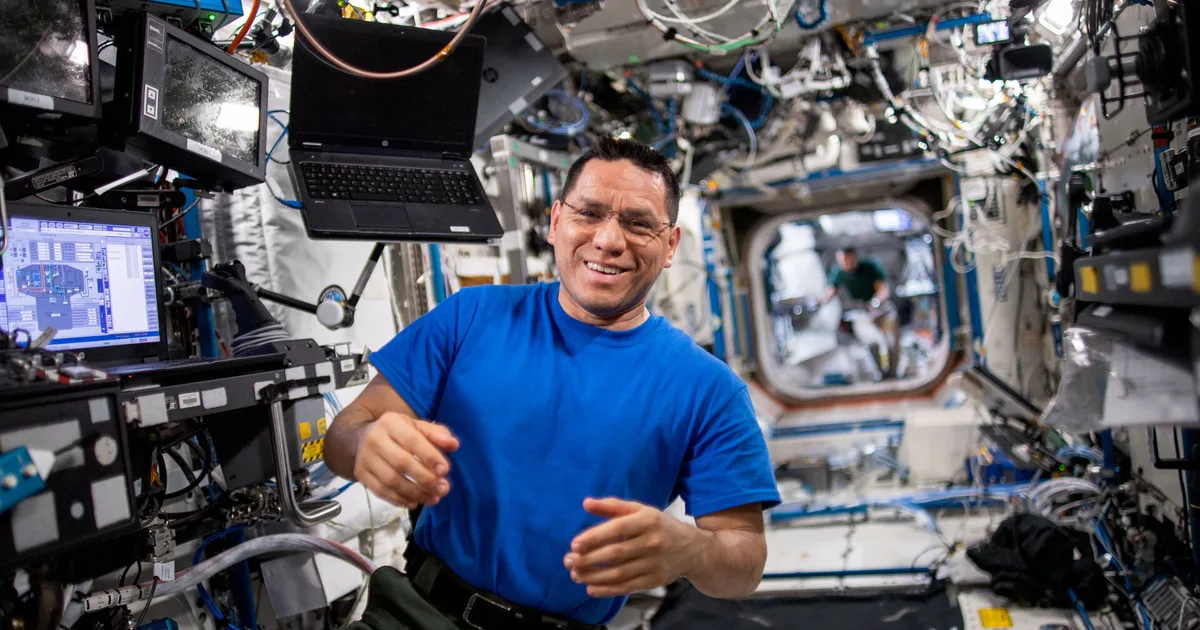
Few things are more frustrating than a slow, laggy laptop, and I cannot imagine having to put up with one while living and working aboard a space station. And since even astronauts aren’t immune to the slow grind of aging work laptops, NASA is planning a big upgrade.
The Expedition 74 crew recently reviewed a station-wide computer upgrade planned for the weekend, starting with the replacement of network servers and followed by activation of “new, more powerful laptop computers” aboard the International Space Station.
Which HP laptop is going to space?

The short update from NASA didn’t reveal the name of the hardware, but a NASA spokesperson later confirmed to The Verge that the station’s next laptop platform is the HP ZBook G9 Mobile Workstation. This model will be replacing the older HP ZBook Fury G2 laptops already in use on the ISS, with the first batch of the newer systems having launched back in October 2025.
The upgrade is more than just a routine equipment swap. While the ISS still runs on practical, mission-tested hardware, modern orbital life also involves science workloads, imaging, communications, logistics, and system monitoring— all of which will benefit from more capable machines.
How powerful are these laptops?

HP’s new laptops are powerful workstation-grade systems. The custom ISS configuration features an Intel Core Ultra 9 vPro HX processor, an Nvidia RTX Pro Blackwell GPU, 128GB of DDR5 memory, and four 2TB NVMe SSDs. While these are specs you won’t commonly find on a consumer-grade laptop, HP states that these new machines also need a specially designed NASA-exclusive AC/DC power adapter, since the ISS primarily runs on DC power and standard Earthbound AC chargers would not work in orbit.
More than 100 HP workstations are already in active use on the ISS, along with microgravity-compatible printers, and the G9 machines represent the third generation of HP compute platforms onboard. With the station set to be decommissioned in 2030, this might be one of, if not the last, big PC refresh before the planned deorbit.


