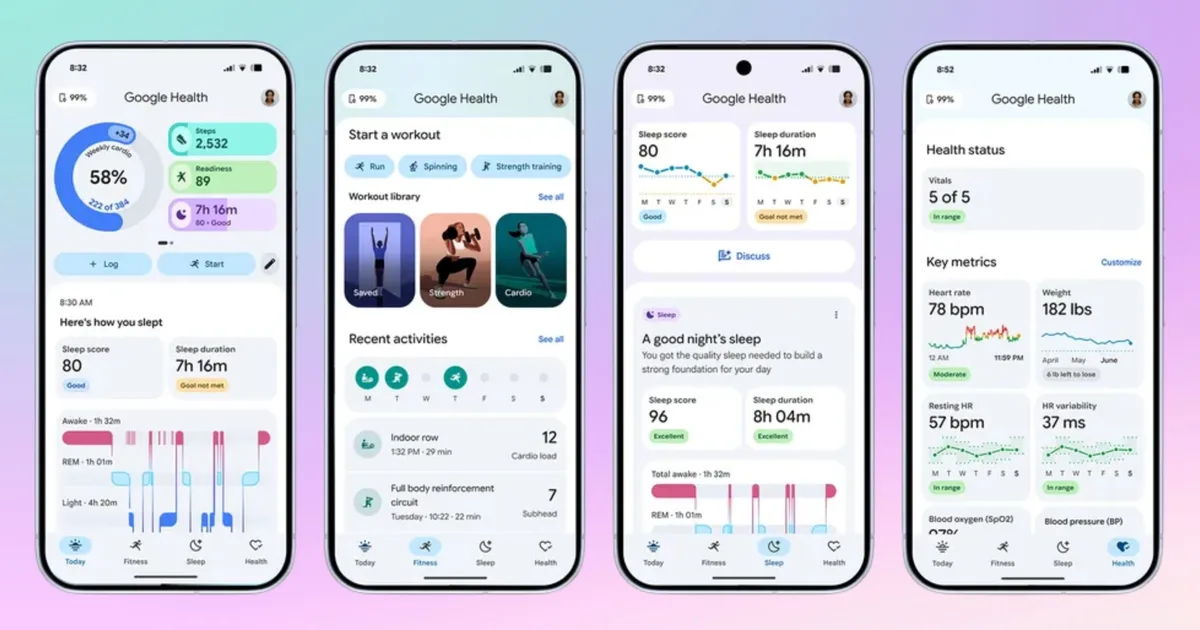
Google is officially pulling the plug on the Fitbit app, replacing it with the new Google Health app on May 19, 2026. It is quite ironic, as the company just announced a new Fitbit Air screenless fitness tracker, but the change will take place via an OTA update.
This is happening after Fitbit’s fifteen-year run, wherein it gathered millions of fitness-focused users and provided them with various health trackers and meaningful insights via its software.
Should Fitbit users worry?
Google has already confirmed on X that the “Fitbit devices aren’t going anywhere,” so all the user data stays in place. In simpler words, all your workout logs from the Fitbit app will still show up in Google Health.
For now, the Fitbit brand stays alive on the hardware front, implying that all its devices will still be available and supported. However, it’s the Fitbit app that’s getting subsumed by Google, in its new Health app.
Google has not confirmed whether existing Fitbit Premium subscribers will be automatically migrated to Google Health Premium. What is confirmed is that the monthly price remains $9.99, while the annual subscription has been revised from $79.99 to $99.99.
What’s new in Google Health?
The most significant addition is multimodal logging. Google Health users can log food, workouts, and health data by typing, speaking, or taking a picture via their smartphone. The app uses AI to automatically recognise and log the nutritional content from the photo (a meaningful addition over the Fitbit app).
Users in the United States can directly upload their medical records to the app, and the Google Health Coach (a new version of the Fitbit Personal Health Coach available via the Health Premium membership) can reference that data while answering health-related questions. Sleep tracking accuracy improves by 15% over the previous Fitbit app’s models, thanks to upgraded machine learning.
The app can also pull data from Apple Health, Peloton, and MyFitnessPal, making it much more open than the Fitbit ecosystem. Rounding out the changes is a customisable dashboard, expanded social leaderboards for steps and cardio load, and improved cycle tracking.
This is a fundamental shift from a device-centric app that counted your steps and stored your workout details to a health platform that connects wearables, medical records, nutritional details, and AI-based coaching, all under one roof.


