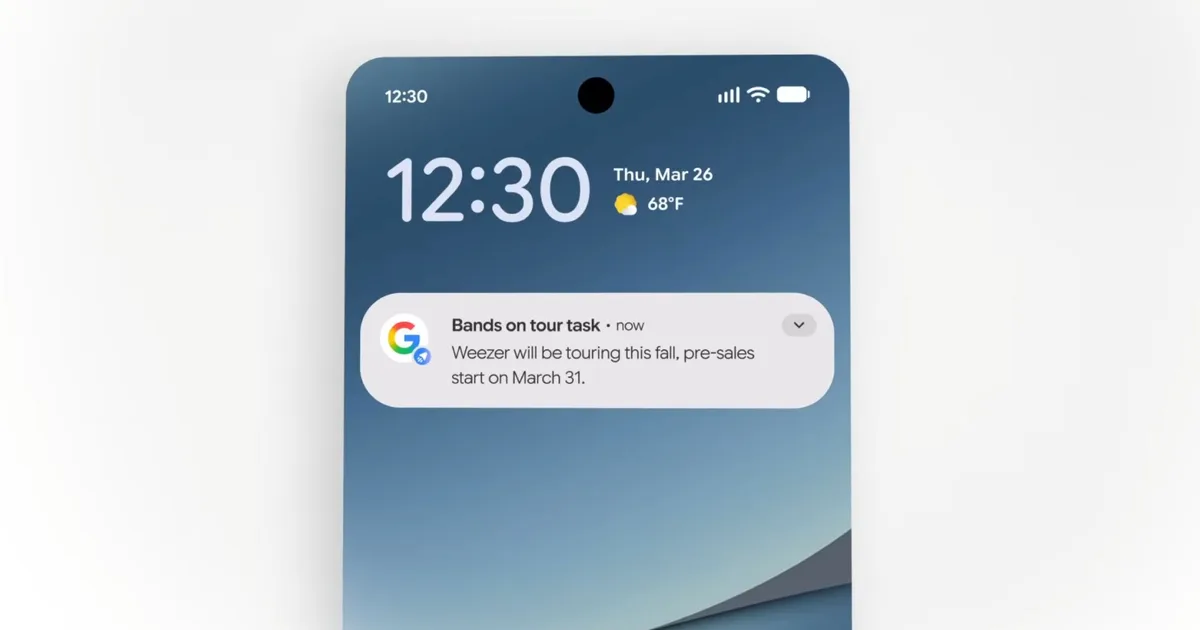
Google has started rolling out AI Search agents that can monitor the web for users and send updates when relevant information changes. The feature was first announced at Google I/O 2026 as part of Google’s wider AI Mode overhaul, which also included a redesigned search box, Gemini 3.5 Flash, personal intelligence features, and new agentic tools for creating mini apps and dashboards.
The new feature is called information agents. It is designed for searches that do not end with a single answer. Instead of checking the same query again and again, users can ask Google to keep tracking a topic in the background.
How Google’s AI Search agents work
Information agents run inside AI Mode in Google Search. Users can enter a prompt asking Google to follow a specific topic, product, event, price, score, or development. The agent then continues scanning sources such as the web, financial data, sports scores, and social posts.
For example, a user could ask Google to track flight prices, monitor updates on a product launch, follow job openings in a specific role, keep an eye on housing listings, or watch a developing news story. When something relevant changes, Google can send a notification through the Google app.
The feature is more flexible than traditional alerts because the request can be written in natural language. Users do not need to rely only on exact keywords. When new information is found, Google sends a brief summary of what has changed or been updated regarding the user’s query, along with relevant links so they can explore the sources in more detail.
Who can use it and where to find it
Google said at I/O 2026 that information agents would first launch for Google AI Pro and AI Ultra subscribers. The current rollout appears to be starting with AI Ultra users inside AI Mode, which starts at $99.99 per month.

To use the feature, users need to open AI Mode in Google Search and ask it to monitor something. It can be triggered by using phrases like “keep me updated on” or “alert me when” in the prompt window. Once created, the agent can be managed from AI Mode history, where users can adjust or stop tracking.
The feature looks useful, though it will need proper real-world testing to see how well it actually performs.


