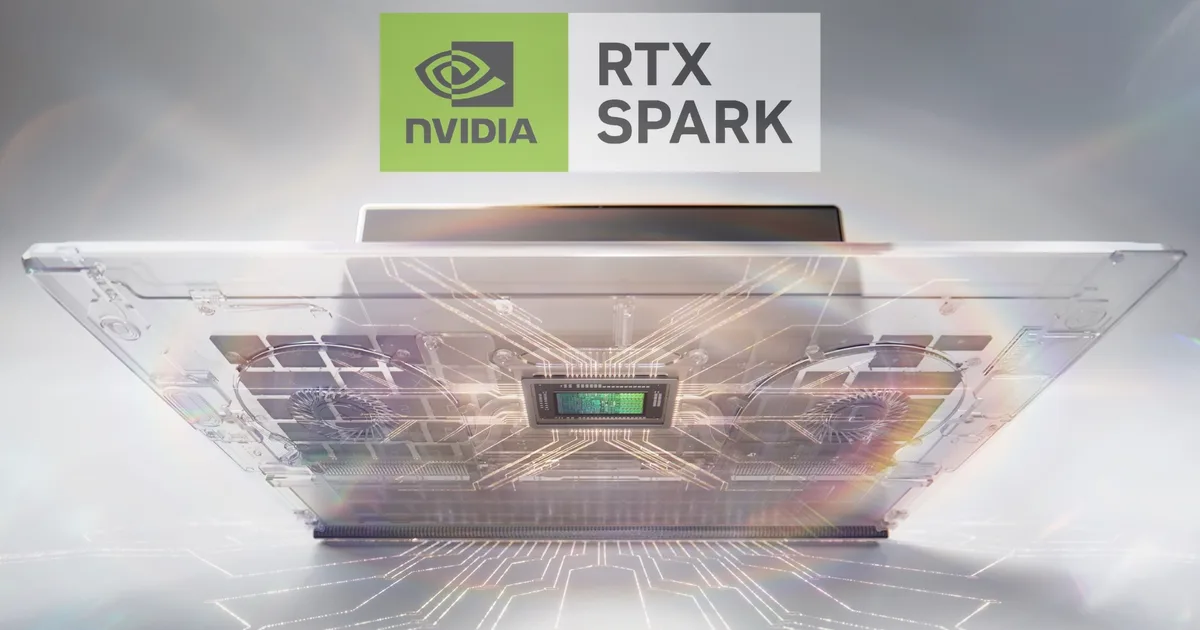
The PC and laptop industry has run on Intel and AMD silicon so long that most people don’t even question whether these are the only options.
Nvidia just answered that question at Computex 2026, in the form of the RTX Spark superchip, and Jensen Huang’s comments about what comes next suggest that it wasn’t a one-time experiment.

Are more RTX Spark iterations on the way?
In a Q&A session with Tom’s Guide at Computex 2026, Nvidia’s founder and CEO, Jensen Huang, confirmed that N1X (the internal codename for RTX Spark) is the first entry in a long-term lineup.
“N2X and N3X are already planned,” Huang said. He also confirmed that “N1X is called N1X because it has a smaller version called N1.” This suggests there is an unreleased N1 version of the chip somewhere in the company’s product pipeline.
“We’re going to expand our family,” the CEO confirmed, signalling that there will be more iterations or successors of the RTX Spark architecture. Huang also compared the RTX Spark-powered systems with something that they can keep in their homes for 5-10 years, just like his home theater system.

Will there ever be an RTX Spark gaming handheld?
Making sure that the RTX Spark platform works flawlessly across the entire Windows ecosystem is Nvidia’s top priority right now. However, upon being asked about an Spark-based gaming handheld, Huang’s answer was cautiously encouraging.
“If somebody wants to do it, we’ll work with them on it.” However, it’s the anti-cheat compatibility that remains one of the biggest active challenges before gaming on RTX Spark becomes viable at scale.
If you’d ask me, Nvidia entering the consumer PC silicon market was always a matter of when, and not if. What makes RTX Spark important is not the first chip that the company has announced but the product roadmap and the long-term commitment behind it.


